Operations Management– Certificate Awarded
This course provides participants with the knowledge and tools to optimize organizational processes and drive operational efficiency.
This course provides participants with the knowledge and tools to optimize organizational processes and drive operational efficiency.
Master the art and science of
organizational efficiency. This course provides a practical and strategic
foundation for designing, managing, and improving operational systems
across manufacturing, service, and public-sector environments. You will
gain the essential tools and frameworks needed to plan, execute, and monitor
operations that drive organizational success.
What You Will Learn Throughout nine comprehensive
modules, you will explore the full lifecycle of operations, including:
Practical Experience This course emphasizes
real-world application through case studies, process mapping exercises, and
operational simulations. You will be assessed through a mix of module
quizzes, individual and group assignments, and a final project designed to test
your ability to apply theory to practical scenarios.
FAQ area empty
Introduction and Course Overview
Defining Operations Management
The Four Pillars of Operations
Impact on Organizational Performance
Manufacturing vs. Service Operations
Operations Across Different Sectors
The Role of the Operations Manager
Cross-Functional Alignment
Summary and Conclusion
Lean in Context: Real-World Case Studies
ASSESSMENT- INTRODUCTION TO OPERATIONS MANAGEMENT
1:0:0Introduction and the Role of Operational Strategy
Defining Operational Strategy and Its Core Components
Aligning Operations with Strategic Vision
The Five Competitive Priorities (Trade-offs)
Capacity Planning and Resource Allocation
Consequences of Capacity Mismatches
Strategic Decision Making: "Make or Buy"
"Make or Buy" in Service Operations
Sustainability and Ethical Considerations
Conclusion and Summary of Strategy
ASSESSMENT-OPERATIONAL STRATEGY
1:0:0Introduction and Course Overview
The Importance of Process Analysis
Defining Business and Operational Processes
Fundamentals of Process Mapping and Workflow Analysis
Identifying and Managing Bottlenecks
Measuring Process Performance
Continuous Process Improvement
Process Redesign vs. Process Re-engineering
Real-World Applications Across Industries
Key Takeaways and Conclusion
ASSESSMENT-PROCESS ANALYSIS AND IMPROVEMENT
1:0:0Introduction to Module 4: Forecasting and Scheduling
The Importance and Impact of Forecasting
Strategic Applications of Forecasting
Qualitative Forecasting: When to Use
Quantitative Forecasting: When to Use
Qualitative Forecasting Methods and Examples
Quantitative Forecasting Methods and Examples
Demand Forecasting Technique: Simple Moving Average
Recognizing Seasonality
Refining and Updating Forecasts
Capacity and Workforce Planning Steps
Capacity Calculation Example (Customer Support Center)
Managing Capacity Gaps and Excess
Scheduling Principles
Managing Uncertainty and Variability
Key Takeaways and Conclusion
ASSESSMENT-FORECASTING AND SCHEDULING
1:0:0Introduction to Module 5: Operational Planning
Importance and Definition of Operational Planning
The Scope of Operational Planning
Translating Strategy into Structured Plans
The Four Pillars of Resource Planning
Risk Assessment and Contingency Planning
Cross-Departmental Coordination
Context-Specific Applications
Core Planning Tools
Conclusion and Key Takeaways
ASSESSMENT-OPERATIONAL PLANNING
1:0:0Introduction to Total Quality Management (TQM)
Defining Quality and Its Dual Perspectives
The Three Pillars of Quality Management
Customer-Focused Quality: The 5 CTQ Factors
Strategies for Meeting Customer Quality Perceptions
Quality Standards and International Recognition
The Concept and Application of Benchmarking
Principles of Continuous Quality Improvement
The Four Steps of Seeking Quality Improvement
Leadership’s Role and Building a Quality Culture
Quality Contexts: African and Global Industry Examples
Practical Application Scenarios
Essential Quality Tools
Summary and Conclusion
ASSESSMENT- TOTAL QUALITY MANAGEMENT
1:0:0Introduction to Implementation and its Importance
Psychological Barriers and Change Management Pillars
The RESI Framework
Governance: Escalation and Decision Rights
Communication Cadence for Team Alignment
Understanding and Addressing Sources of Resistance
Risk Mitigation and Strategic Rollouts
Tracking Progress and Performance Measurement
Managing Operational Challenges and Coordination Breakdowns
Conclusion and Forward Readiness Checks
ASSESSMENT-IMPLEMENTATION OF OPERATIONAL PLANS
1:0:0Introduction to Monitoring and Evaluation
Defining Monitoring vs. Evaluation
Essential Characteristics of KPIs
Common Operational KPIs
Steps to Building KPIs into Performance Systems
Data Collection and Reporting Best Practices
Controlling: Moving from Gaps to Action
Continuous Improvement Feedback Loops
Course Summary and Final Takeaways
ASSESSMENT-MONITORING AND EVALUATION OF OPERATIONS
1:0:0
0.0
 7 Students
 3 Courses
 0 Review
C-Suite Executive Support | Strategic Operations | MSc International Business | PMI Member With a strong background in strategic operations, executive coordination, and youth development, she brings a results-driven and people-centered approach to every engagement. She specializes in building efficient systems, supporting high-level executives, and driving seamless execution across fast-paced and multicultural environments. Her expertise spans strategic operations and execution, where she develops structures for planning, tracking, and follow-through that keep teams aligned and projects on course. She also provides executive support and stakeholder engagement, ensuring smooth coordination, discretion, and effective communication across teams, stakeholders, and international time zones. Passionate about empowering the next generation, she mentors and trains young professionals—particularly women—equipping them with practical workplace skills, self-leadership, and career readiness competencies that bridge the gap between academic learning and professional success. In addition, she has extensive experience in VIP protocol, hospitality, and stakeholder liaison, managing high-level hosting and coordination for senior executives, dignitaries, and international visitors. She has successfully coordinated major events and convenings involving leaders from both the public and private sectors. Her work has also involved multi-country execution and international coordination across more than 17 countries, managing complex travel schedules, cross-border operations, and stakeholder engagements with excellence and professionalism.
View Details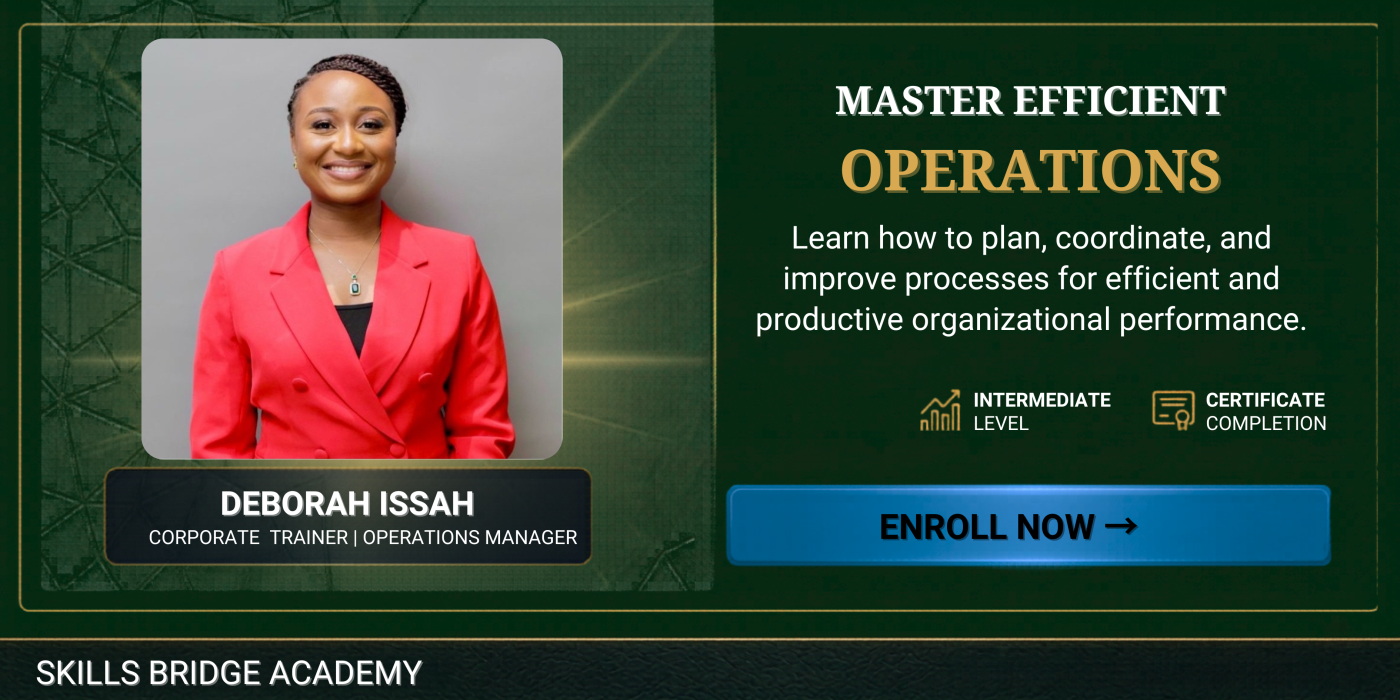
 Login to Subscribe
Students
1
language
English
Duration
09h 00mLevel
intermediate
Expiry period
1 Months
Certificate
Yes English
 Certificate Course

 09h 00m